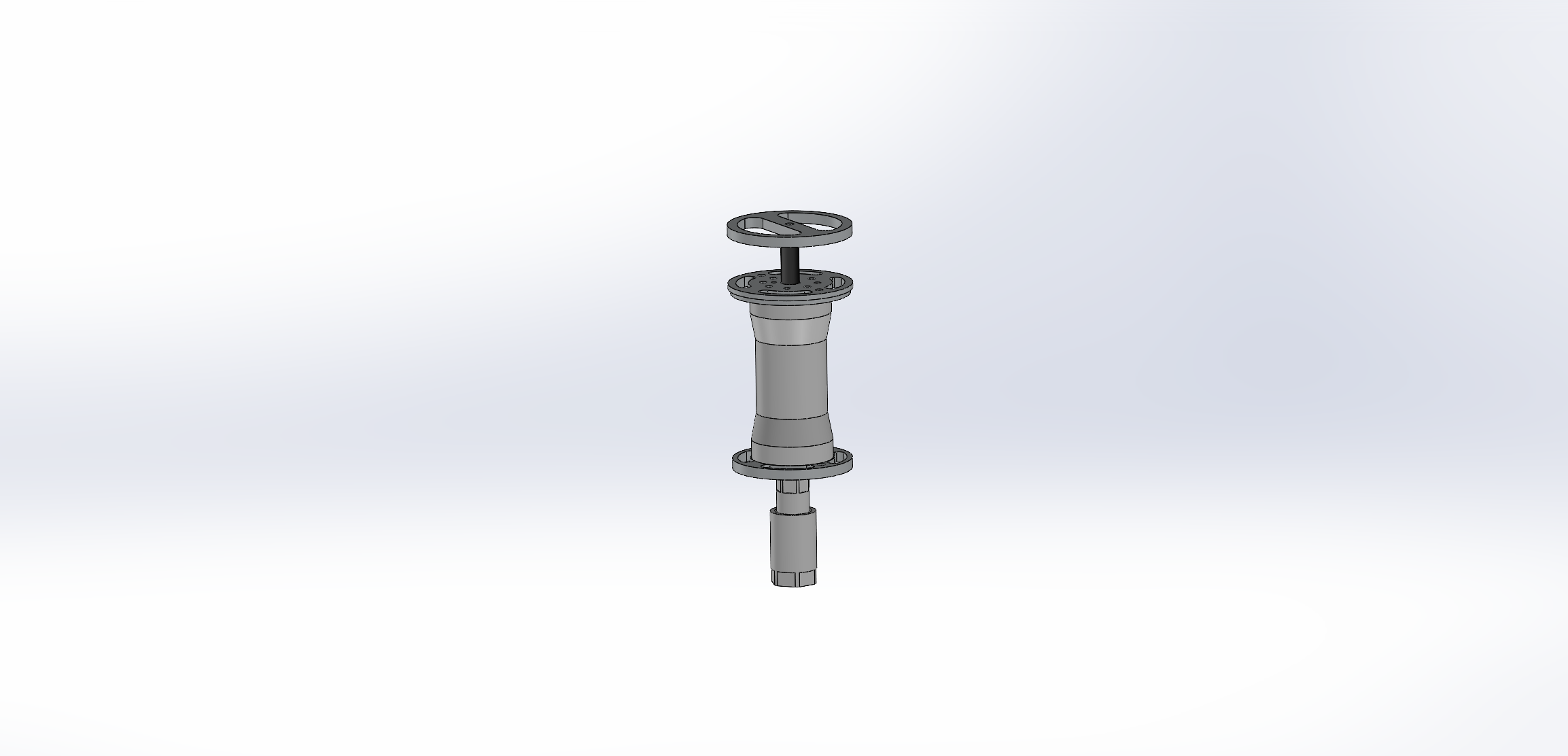
Overview
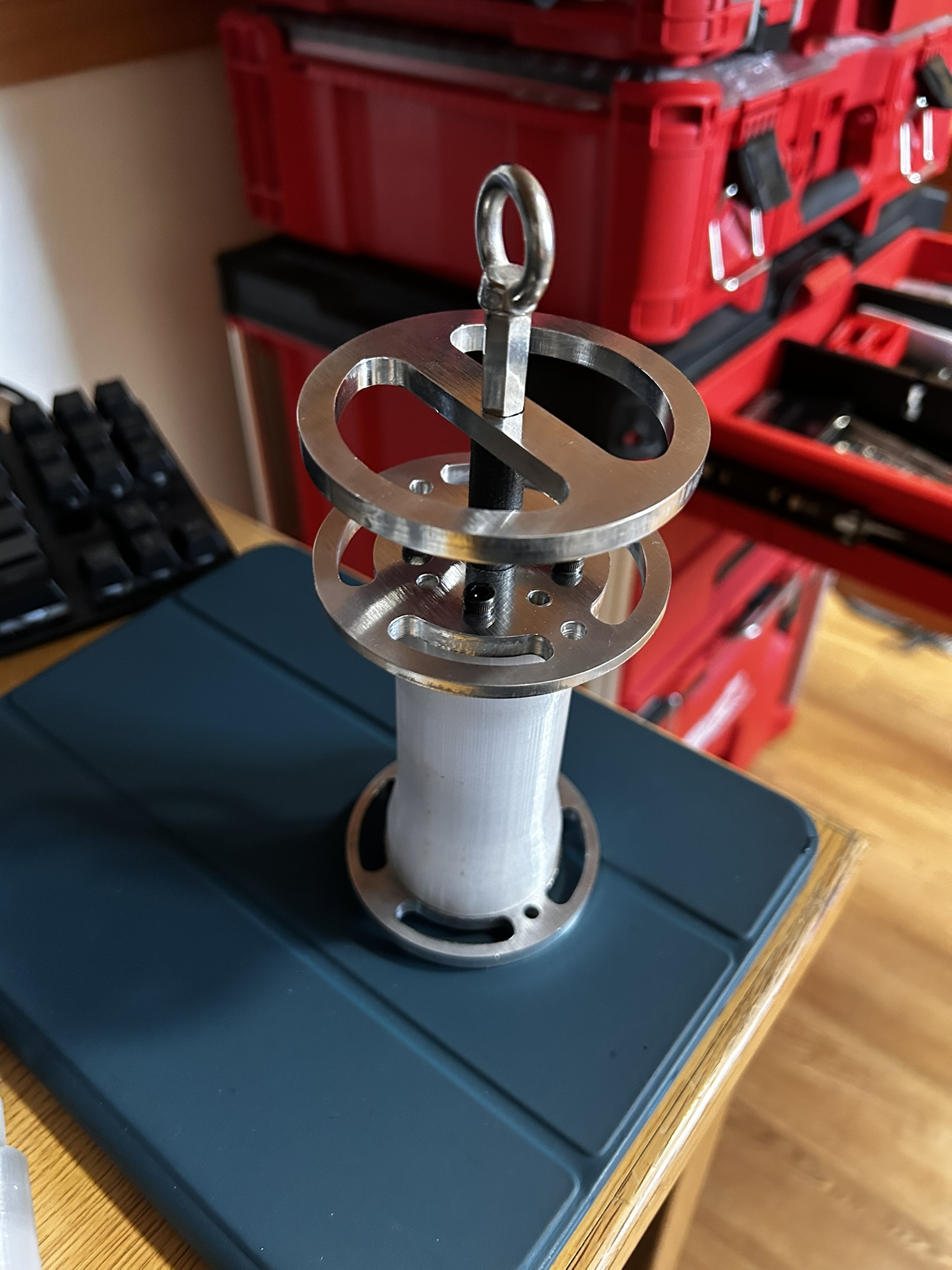
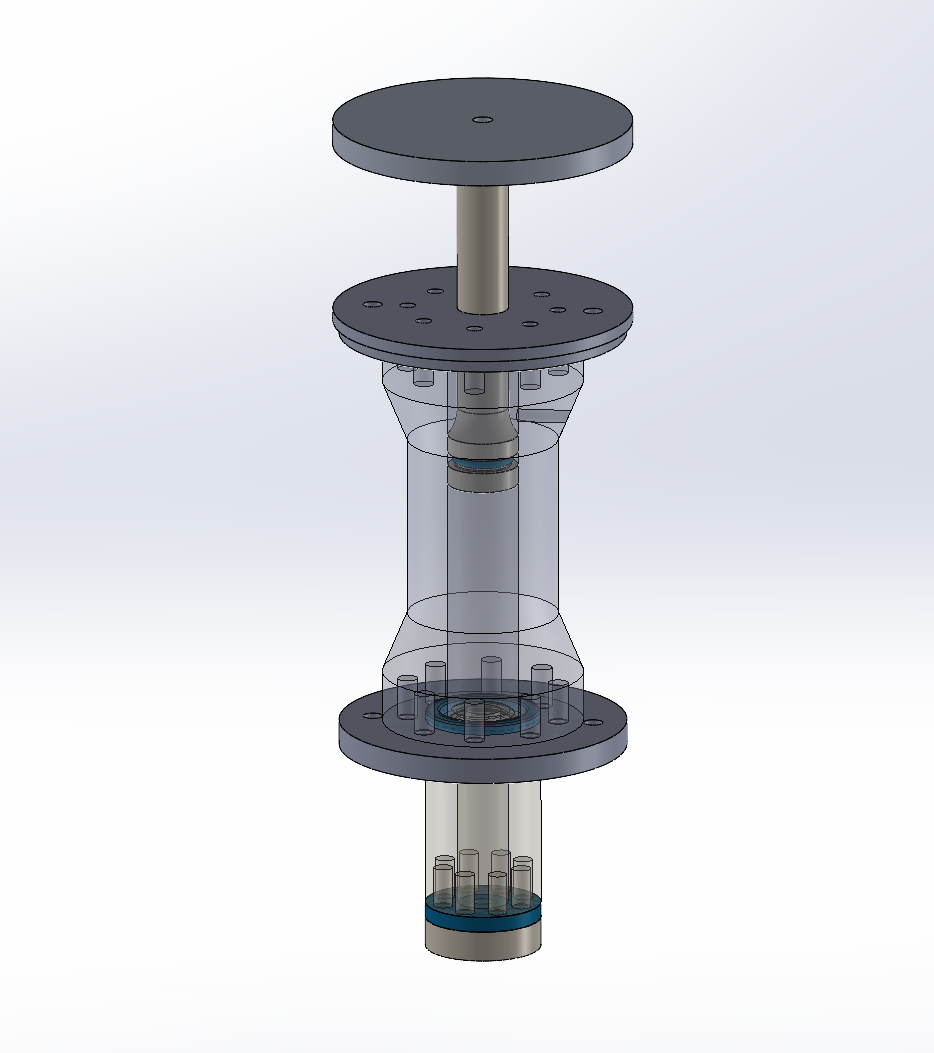
I modeled the piston ejection system in SOLIDWORKS, emphasizing ease of assembly and identifying potential catastrophic failure points. Two versions were developed: the first used radial O-ring seals for the bulkheads and a gasketed charge canister for piston charge. The second version replaced radial seals with bore seals and introduced a burst disk in the charge canister to maintain 1 atm pressure regardless of altitude. Both designs were ground-tested for effectiveness in deploying parachutes on high-powered rockets, and tensile testing was performed on the cylinder material to confirm adequate layer adhesion. Version one was successfully flown, validating the feasibility of a fully 3D-printed piston system and version two will be flown in the next 6 months.
Version 2:
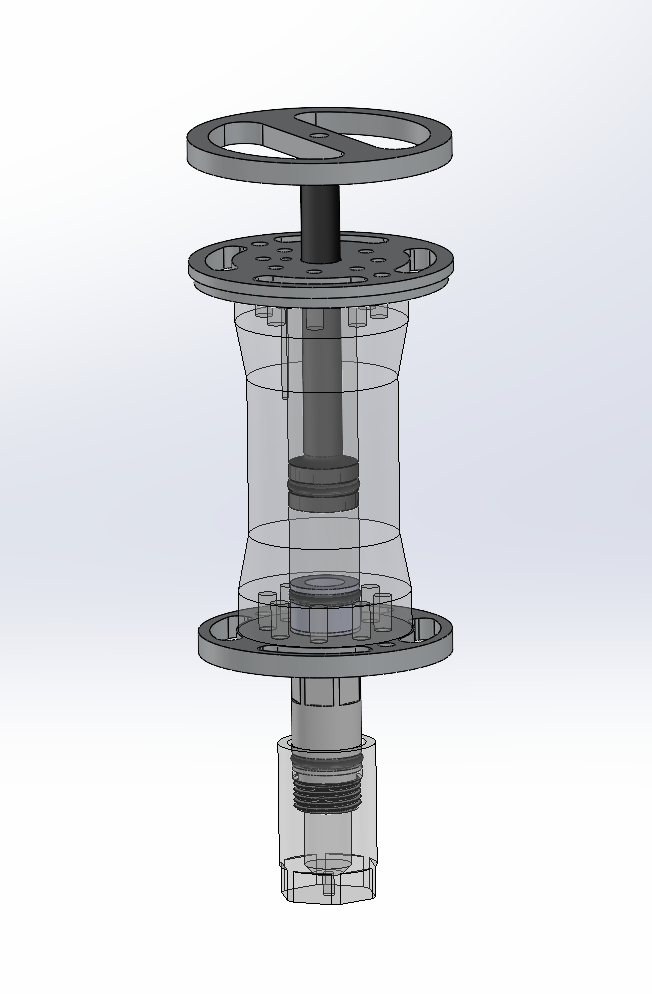
Version 1:
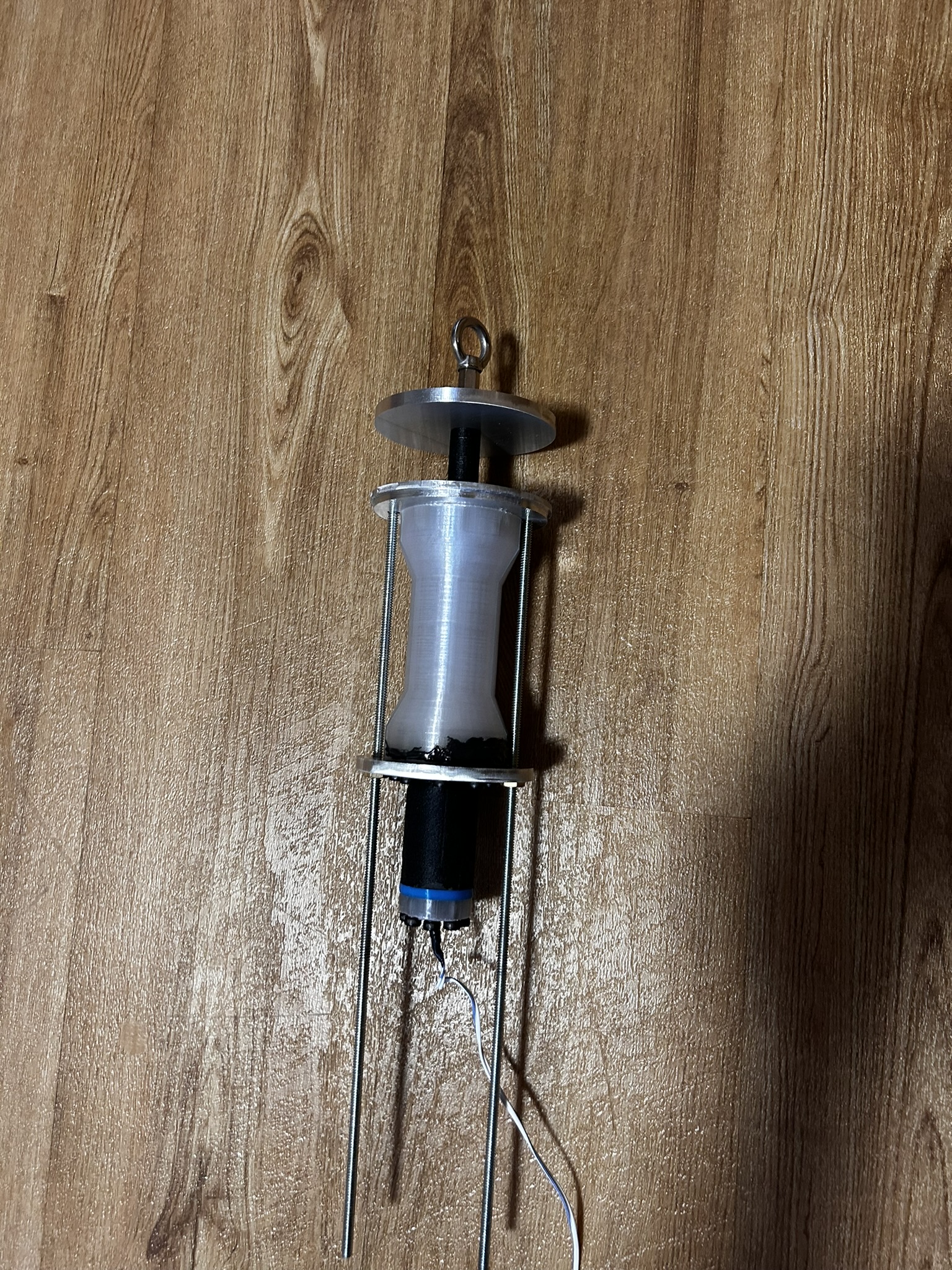
Flight Test 2: Loss of Compression in Piston Cylinder Which Led to a Partial Deployment Failure
Flight Test 1: Successful Flight and Recovery but Piston Sustained Damage
Accomplishments
Iteratively designed two piston versions to improve sealing and piston power reliability
Conducted ground tests to verify piston actuation and parachute deployment
Material selection and tensile testing ensured cylinder integrity under operational loads
Demonstrated that 3D-printed components can replace metal for critical rocket applications